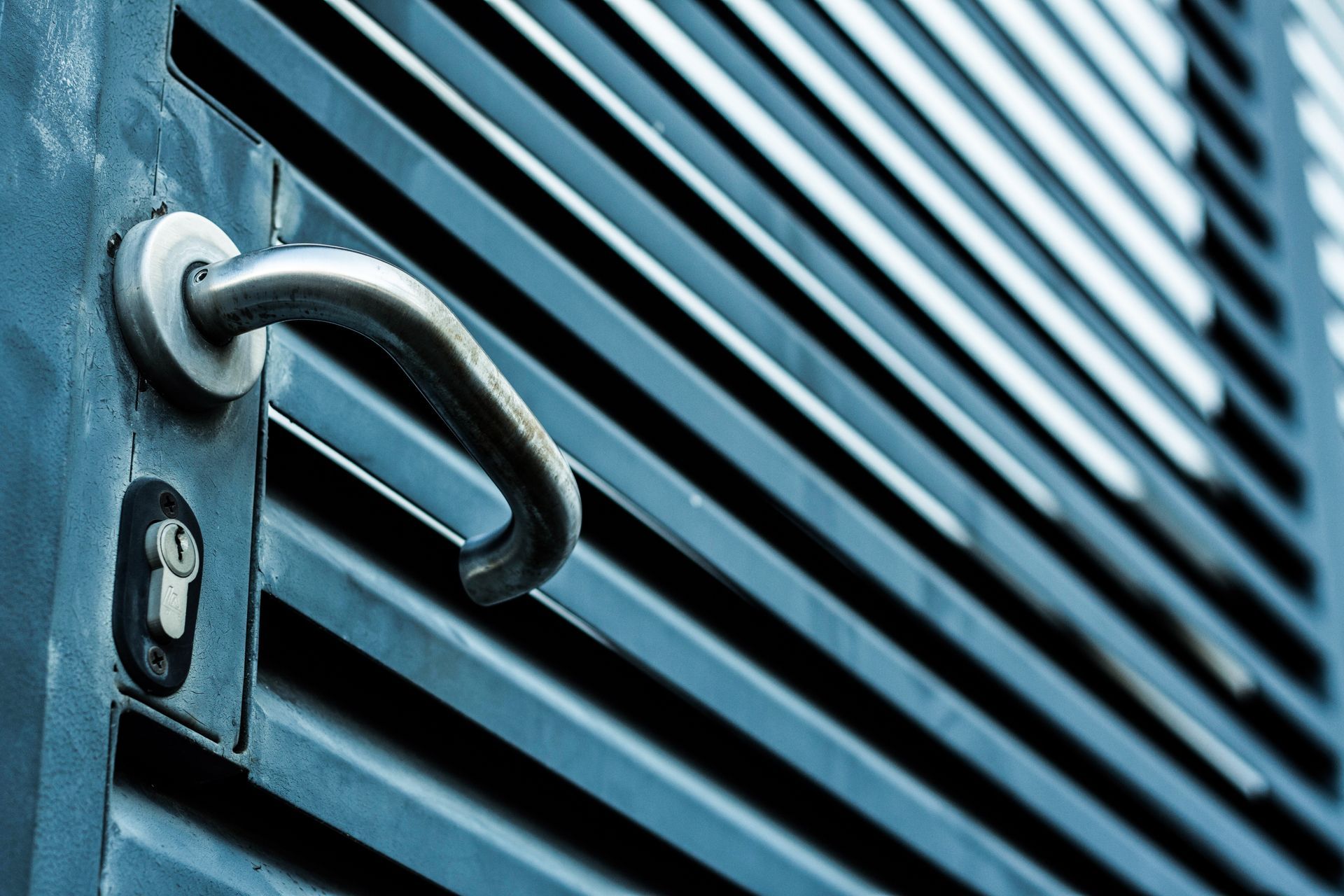
Not every deadbolt is equally hard to defeat. A standard Grade 2 residential lock and a restricted, pick-resistant cylinder from a high-security line can look nearly identical mounted in a door, but the difference in what it takes to open one without a key — picking, bumping, drilling — is substantial. High-security hardware exists for homes and businesses that want that gap to matter, whether the concern is a determined burglar, a commercial space with sensitive contents, or simply not wanting copies of a key floating around outside anyone’s control.
What “High-Security” Actually Means
High-security isn’t a marketing label — it corresponds to real, testable resistance against the three main ways a lock gets defeated without a key: picking, where tools manipulate the pins directly; bumping, a fast variation on picking using a specially cut key and a strike; and drilling, a brute-force attack on the cylinder itself. Lines like Medeco, Mul-T-Lock, and Abloy build cylinders around mechanisms — angled or rotating pins, sidebar mechanisms, secondary locking elements — specifically engineered to resist all three, tested and rated well beyond what a standard residential pin-tumbler cylinder is built to handle.
Restricted Keyways and Controlled Duplication
The other half of high-security hardware is the key itself. These systems cut keys on patented, restricted blanks that aren’t stocked at a hardware store or available to any locksmith who happens to own a blank-cutting machine — duplication has to go through an authorized dealer, usually tied to a signed authorization card the property owner controls. That combination — a cylinder that resists physical attack and a key that resists casual copying — is what separates a genuinely high-security lock from a standard deadbolt with a fancier name.
Homes and Businesses Both Use These Locks
High-security hardware isn’t reserved for banks or server rooms. Homeowners install it on a primary entry door for much the same reason a business installs it on an office suite — meaningfully raising the effort required to get in without a key, while controlling who can get a copy made afterward. A business with several employees benefits from the controlled-duplication side especially, since knowing exactly how many keys exist matters more once a staff, not just a family, is carrying them.
Pairing High-Security Hardware With a Deadbolt Install or a Master Key System
High-security cylinders often get specified as part of a bigger job rather than on their own. A homeowner planning a deadbolt installation might choose a high-security cylinder over a standard Grade 1 deadbolt for the added pick and duplication resistance; a business setting up a master key system might build the whole hierarchy on a restricted high-security keyway from the start, so the controlled-duplication benefit applies to every key level, not just the top one. Either way, the decision to go high-security is worth making early, since retrofitting it onto an already-installed standard lock is more work than specifying it up front.
The Premium Behind High-Security Hardware
High-security cylinders and keys cost more than standard hardware, and the honest reason is what’s actually different: tighter manufacturing tolerances, more complex internal mechanisms, and a restricted-key program that has real overhead to administer. Pricing also depends on how many doors are being upgraded and whether the job is a standalone cylinder swap or part of a larger install like a new deadbolt or a master key system. A technician can quote the specific hardware and door count once both are known.
Choosing the Right Doors for It
Not every door in a house or a building needs the top tier of hardware. A primary entry door, a server room, or wherever the actual risk or the actual value being protected is highest is generally where high-security hardware earns its cost; a side door already covered by other physical barriers may do fine with standard Grade 1 or Grade 2 hardware instead. Walking through which doors carry the most exposure is part of deciding where the upgrade is worth it.
We handle all of this on-site across the metro — see our service areas.
Frequently Asked Questions
Is a high-security lock worth the extra cost over a Grade 1 deadbolt?
It depends on what you're weighing it against. A Grade 1 deadbolt is genuinely strong hardware and resists forced entry well. What it doesn't offer is the pick, bump, and drill resistance engineered into high-security cylinder designs, or restricted-key duplication control. If forced entry is the only concern, Grade 1 covers it. If picking, bumping, or controlling who can get a key copied also matter to you, the premium buys measurable protection against those specific methods that Grade 1 alone doesn't test for.
How does a high-security lock compare to a smart lock?
They solve different problems. A high-security lock is about the mechanical cylinder resisting physical attack and controlling key duplication — it doesn't add connectivity or remote access. A smart lock adds convenience and features like remote locking, activity logs, or keyless codes, but its mechanical cylinder, if it has one, isn't necessarily rated to high-security standards on its own. Some smart locks pair a high-security-rated cylinder with electronic features, which is worth asking about if both matter to you.
How exactly is key copying controlled on a high-security system?
The blanks themselves are patented and restricted, meaning they aren't sold at hardware stores or stocked by locksmiths outside an authorized dealer network for that brand. Getting a copy generally requires going through that authorized channel, where the request gets checked against a registered signature or authorization record on file for the property owner or business, rather than walking into any shop with the key in hand. It's the restriction on the blank, not anything about the physical key shape alone, that makes casual copying much harder.