
Fire safety compliance is not just a legal obligation — it is a direct line of defense for the people inside a building. For property owners, facility managers, and business operators across Minneapolis, understanding the standards governing fire doors and egress hardware is essential. NFPA 80, the Standard for Fire Doors and Other Opening Protectives, establishes the minimum requirements for the installation, inspection, testing, and maintenance of fire door assemblies throughout the United States.
Yet many building owners are unaware of how detailed these requirements are — and how quickly non-compliance can translate into serious liability. This guide breaks down what NFPA 80 means for your property and why working with a qualified locksmith familiar with commercial hardware standards matters more than most people realize.
What Is NFPA 80 and Why Does It Apply to Your Building?
NFPA 80 is a standard developed and maintained by the National Fire Protection Association, a nonprofit organization that has shaped fire safety codes in the U.S. for over a century. The standard covers fire door assemblies — the complete system of a door, frame, hardware, and any glazing — and specifies how each component must perform under fire conditions.
In Minneapolis, NFPA 80 is adopted as part of Minnesota’s statewide building and fire codes, meaning compliance is not optional. The Minnesota State Fire Marshal Division enforces fire safety standards for commercial and multi-family residential buildings, and local inspectors reference NFPA 80 when evaluating fire door assemblies during inspections.
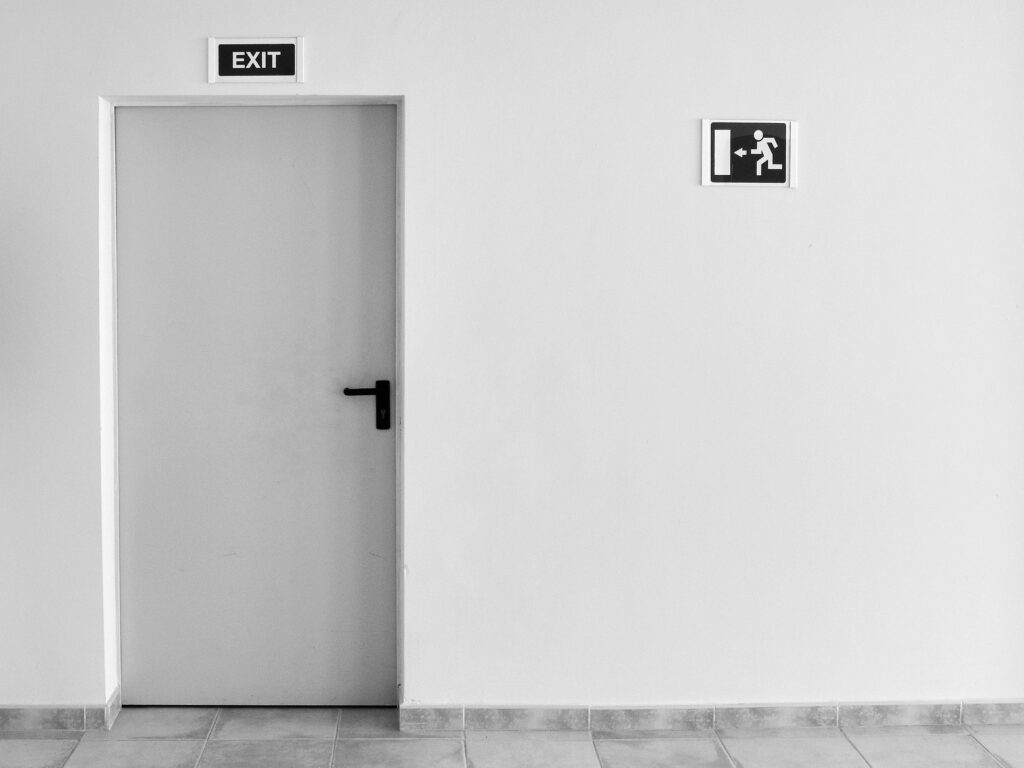
Any door in a fire-rated wall — from a stairwell door to a storage room entrance — falls under NFPA 80. That includes the hardware: hinges, latches, closers, locks, exit devices, and coordinator mechanisms. If a single component fails to meet the standard, the entire assembly is considered non-compliant.
Key NFPA 80 Requirements for Fire Door Hardware
Understanding the hardware requirements under NFPA 80 helps clarify why compliance is more complex than simply installing a fire-rated door.
Self-Closing and Latching Mechanisms
Every fire door must be self-closing — meaning it automatically returns to the closed position without human intervention. The door must also be self-latching, engaging the latch bolt fully into the strike plate when closed. A door propped open, or one with a worn latch that does not engage properly, is an immediate violation.
Exit Devices and Panic Hardware
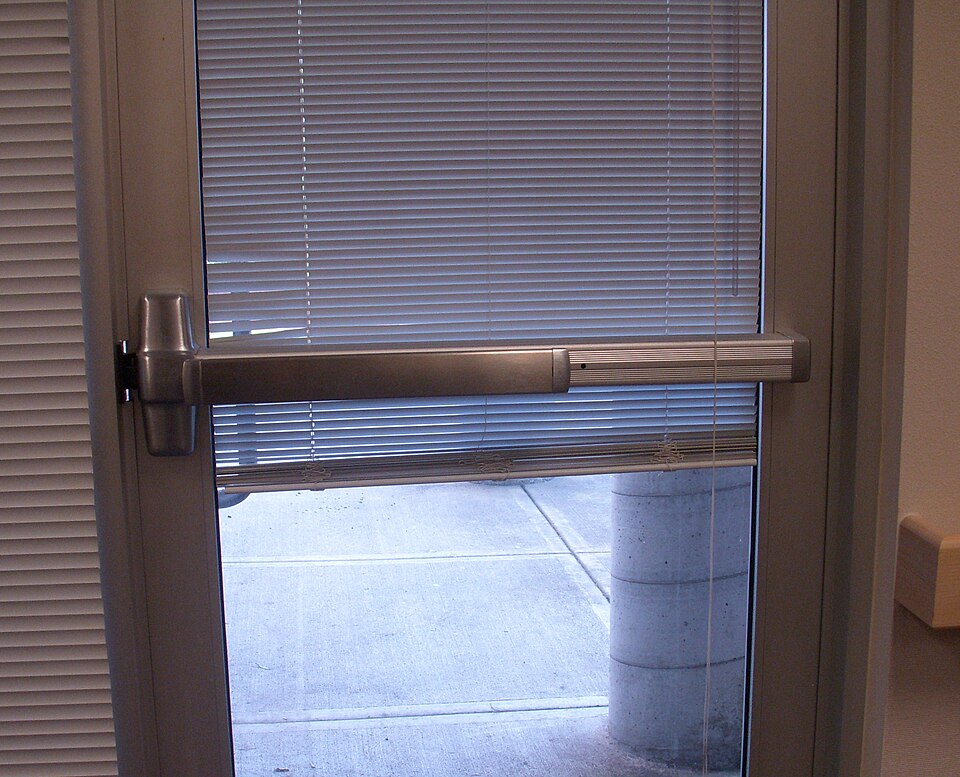
In occupancies where panic hardware — also called exit devices — is required, NFPA 80 mandates that these devices are listed and labeled for use on fire door assemblies. Exit devices allow occupants to push their way out in an emergency without operating a conventional handle. Not every exit device is rated for fire door use, and substituting an unlisted product can void the fire rating of the entire assembly.
Coordinator Hardware
Double-door assemblies often require a coordinator — a device that controls the closing sequence so that the astragal door (the leaf without the latch) closes first, followed by the active leaf. Without proper sequencing, the doors cannot latch, leaving a gap. NFPA 80 requires coordinators on any double egress door where sequence matters for latching.
Annual Inspection Requirements
One of the most frequently overlooked NFPA 80 provisions is the requirement for annual inspection and testing of all fire door assemblies. According to NFPA 80 Section 5.2, inspections must be performed by individuals knowledgeable in fire door requirements and must be documented. The inspection covers the door, frame, hardware, glazing, and labels — and any deficiencies must be corrected promptly.
For Minneapolis property owners, failing to conduct and document these inspections can result in fines during city or state fire marshal inspections, and it can affect insurance coverage in the event of a fire.
How NFPA 80 Intersects with ADA and Minnesota Accessibility Standards
Fire door hardware compliance does not exist in isolation. In Minnesota, commercial buildings must also satisfy ADA (Americans with Disabilities Act) requirements for accessible door hardware — and the two sets of standards sometimes create tension. For example, NFPA 80 requires fire doors to be self-closing, but ADA-compliant hardware must allow people with limited mobility to operate doors with minimal force.
Magnetic hold-open devices offer one solution: they hold a fire door open during normal use but release immediately when a fire alarm activates, allowing the door to close automatically. These devices must be listed for fire door use and wired into the building’s fire alarm system to remain NFPA 80 compliant.
Navigating these overlapping requirements takes hardware knowledge that goes beyond general installation experience. A commercial locksmith familiar with both egress hardware standards and local Minneapolis building code requirements can help property owners identify solutions that satisfy both frameworks.
Common Violations Found During Minneapolis Fire Door Inspections
Fire door deficiencies turn up frequently during code inspections, and many of them trace back to hardware problems rather than the door itself. The most commonly cited issues include:
- Doors that fail to latch fully due to worn hardware or misaligned strikes
- Unlisted or non-rated hardware installed on fire-rated assemblies
- Missing or damaged door closers that prevent self-closing function
- Unapproved field modifications — drilling extra holes, removing stops, or adding non-listed hardware
- Absence of required labels on door, frame, or hardware components
- Lack of annual inspection documentation
Each of these violations can result in a notice of non-compliance from a fire marshal, mandatory corrective action, and in some cases, occupancy restrictions until repairs are completed. In Minneapolis, properties subject to the Minnesota State Building Code face ongoing scrutiny during certificate of occupancy renewals and change-of-use inspections.

What the NFPA 80 Inspection Process Looks Like
A proper NFPA 80 fire door inspection follows a systematic process. The inspector — whether a qualified third party or a fire marshal representative — evaluates each fire door assembly against the standard’s criteria and records findings in writing.
The inspection process typically covers:
- Verifying the presence and legibility of the fire rating label on the door and frame
- Testing the self-closing and self-latching function with no obstructions
- Checking hardware for listing marks and confirming it is appropriate for the assembly
- Examining glazing and vision lites for proper fire-rated glazing materials
- Confirming clearances around the door perimeter meet NFPA 80 tolerances
- Reviewing coordinator operation on double-door assemblies
Deficiencies discovered during inspection must be corrected by a qualified party and re-inspected. Keeping signed inspection records on file is not just good practice — it is a code requirement under NFPA 80 and a critical piece of documentation during any insurance claim or litigation following a fire event.
Liberty Locksmith in Minneapolis Can Help You Stay Compliant
Understanding NFPA 80 gives Minneapolis property owners a concrete advantage: it turns a confusing compliance obligation into a clear checklist of what your fire door hardware must do and how it must be maintained. That knowledge empowers you to ask the right questions, catch problems before inspectors do, and protect the people your building serves.
Liberty Locksmith LLC serves commercial and residential clients across Minneapolis, the Twin Cities metro, and surrounding communities. Our technicians work with a full range of commercial hardware — including panic devices, door closers, high-security locks, access control systems, and egress hardware — and understand how these products must perform to meet fire code requirements.
Whether you are preparing for a fire marshal inspection, dealing with a hardware failure on a fire-rated assembly, or upgrading egress hardware to meet current standards, our team is available 24/7 with fast response times and upfront pricing. We also handle automotive locksmith services across the Twin Cities for clients who need complete locksmith coverage in one call.
Reach out through our contact page to connect with Liberty Locksmith today — and take the guesswork out of fire door hardware compliance in Minneapolis.


