
Minneapolis, Minnesota built its early identity on the banks of the Mississippi River, and nowhere is that origin story more visible than in the Mill District — the stretch of downtown riverfront where the city’s flour milling industry once dominated global grain markets and left behind a collection of industrial structures that now anchor one of the most vibrant urban neighborhoods in the upper Midwest.
Located along the west bank of the Mississippi between the Stone Arch Bridge and the Guthrie Theater, the Mill District draws residents, visitors, historians, and property investors into a neighborhood where nineteenth-century industrial architecture and twenty-first-century urban living exist side by side.
For Minneapolis residents and anyone with a stake in Hennepin County real estate, understanding the Mill District’s origins and ongoing transformation reveals why this corner of the city continues to attract sustained attention and investment.
Saint Anthony Falls and the Flour Milling Legacy
The district’s industrial history is extraordinary by any measure. At its peak in the late nineteenth century, Minneapolis was the flour milling capital of the world — a title the city held from 1880 until 1930, when production shifted southward. The mills clustered along the riverfront took advantage of Saint Anthony Falls, the only natural waterfall on the Mississippi River and the power source that made large-scale milling economically viable before electrification.
The Minnesota Digital Library and the City of Minneapolis have worked jointly to preserve and interpret this industrial heritage through the riverfront park system and the Mill Ruins Park that occupies the site of the former Washburn A Mill complex.
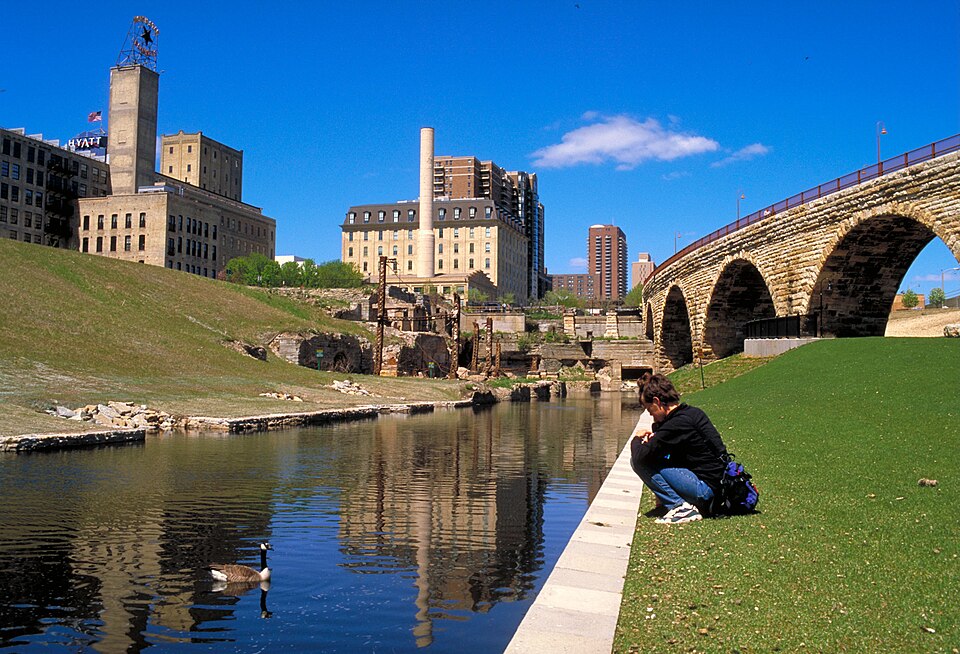

Saint Anthony Falls and the Power of Industrial Geography
Saint Anthony Falls did not merely provide water — it provided the hydraulic power that made Minneapolis one of the most productive industrial cities in North America during the Gilded Age. Millers and engineers constructed an elaborate system of tunnels, sluiceways, and millraces — channels that directed water from the falls through mill machinery — beneath and around the riverfront district.
These underground water channels, some of which remain accessible today through guided tours operated by the Minnesota Historical Society, represent one of the most significant pieces of nineteenth-century industrial infrastructure surviving anywhere in the United States.
The engineering scale of this system was remarkable. At its height, the milling district along the riverfront processed enough wheat annually to bake bread for twelve million people every day, according to historical records maintained by the Minnesota Historical Society.
This output required not only mechanical power but also sophisticated logistics — grain arrived by rail from the Great Plains, was processed in riverside mills, and shipped outward by rail and river to national and international markets. The entire operation depended on a tight cluster of industrial buildings, warehouses, and worker housing concentrated within a few blocks of the falls.
That industrial concentration left a physical legacy that defines the Mill District today. The thick masonry walls, timber framing, and heavy construction of the surviving mill buildings have proven remarkably adaptable to residential and commercial reuse — a characteristic that has driven the neighborhood’s transformation from post-industrial vacancy to one of Minneapolis’s most desirable addresses over the past three decades.
Adaptive Reuse and the Mill District’s Modern Identity
The transformation of the Mill District from abandoned industrial corridor to thriving urban neighborhood unfolded gradually following the closure of the last active flour mills in the mid-twentieth century. The Washburn A Mill — which suffered a catastrophic explosion in 1878 that killed eighteen workers and destroyed much of the surrounding milling complex, then was rebuilt and operated until 1965 — now houses the Mill City Museum, a Smithsonian-affiliated institution operated by the Minnesota Historical Society that interprets the history of flour milling and its impact on Minneapolis and the nation.
Surrounding the museum, former mill buildings and warehouse structures have been converted into loft condominiums, apartment buildings, office space, and retail anchors that give the neighborhood its contemporary character. The Guthrie Theater, designed by French architect Jean Nouvel and opened in 2006, anchors the southern end of the district and added a major cultural institution to the riverfront that draws audiences from across the Twin Cities metropolitan area.
This combination of preserved industrial heritage, adaptive reuse residential development, and cultural programming has made the Mill District a reference point for urban revitalization efforts in cities across the country. The Mill District sits within a broader Minneapolis urban core that includes major institutional anchors drawing residents and workers into the city daily.
The University of Minnesota Twin Cities campus lies just east across the river, and its student and faculty population contributes significantly to the residential demand and street-level activity that sustains the Mill District’s commercial and cultural amenities year-round.
Minneapolis Climate and Its Effect on Building Infrastructure
Minneapolis experiences one of the most demanding urban climates in the continental United States. The city’s humid continental climate delivers average January lows near -3°F and summer highs that regularly exceed 85°F — a thermal range that subjects building materials, mechanical systems, and hardware to extreme expansion and contraction cycles throughout the year.
According to NOAA climate data, Minneapolis averages over 54 inches of snowfall annually, placing consistent freeze-thaw stress on exterior building components including door frames, thresholds, and locking mechanisms.
Minneapolis’s climate affects the Mill District’s built environment in ways that go beyond aesthetics. The city’s freeze-thaw cycles — with January lows averaging near -3°F and over 54 inches of annual snowfall — place consistent seasonal stress on building materials, exterior hardware, and the historic masonry that defines the neighborhood’s converted mill buildings.
Property owners in the district navigate these maintenance demands as a routine part of stewardship in one of the country’s most weather-demanding urban climates. Residents across Minneapolis neighborhoods — from the Mill District to the areas surrounding US Bank Stadium in East Downtown — share these same seasonal building challenges regardless of construction type.
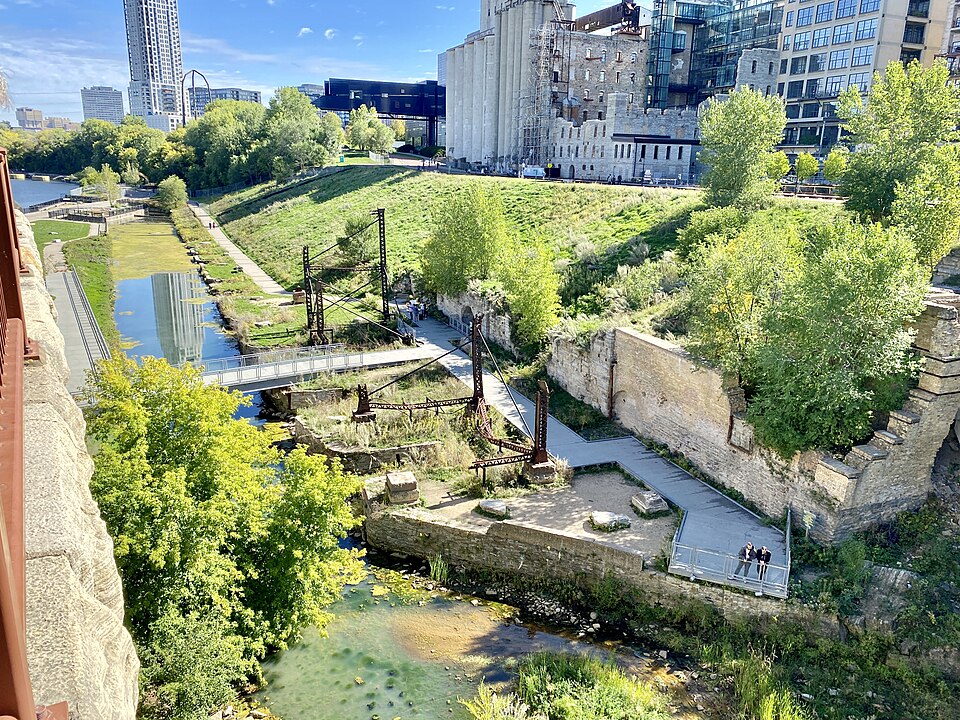

The Mill District’s Role in Minneapolis Urban Development
The Mill District’s successful transformation has influenced urban planning and preservation policy across Minneapolis and the broader Twin Cities region. The neighborhood demonstrated that post-industrial riverfront land could be redeveloped in ways that preserved historical character while generating significant residential density and tax base — a lesson that has informed subsequent redevelopment efforts along the Mississippi corridor in St. Paul and in industrial districts across Hennepin and Ramsey counties.
The City of Minneapolis maintains design review standards for new construction and major renovations within the Mill District that require compatibility with the neighborhood’s historic industrial aesthetic. These standards, administered through the Minneapolis Heritage Preservation Commission, ensure that new development reinforces rather than erodes the visual coherence that makes the district distinctive.
For property owners undertaking renovations within the district’s historic overlay zone, these standards extend to exterior hardware, building entry systems, and facade materials — decisions that shape both the visual coherence of the district and the long-term functionality of individual buildings. Navigating this process requires familiarity with both the city’s design review requirements and the practical realities of working within century-old building stock.
Residents and property managers across Minneapolis looking for guidance on the district’s regulatory environment can find additional local resources through Liberty Locksmith serving the Twin Cities area.