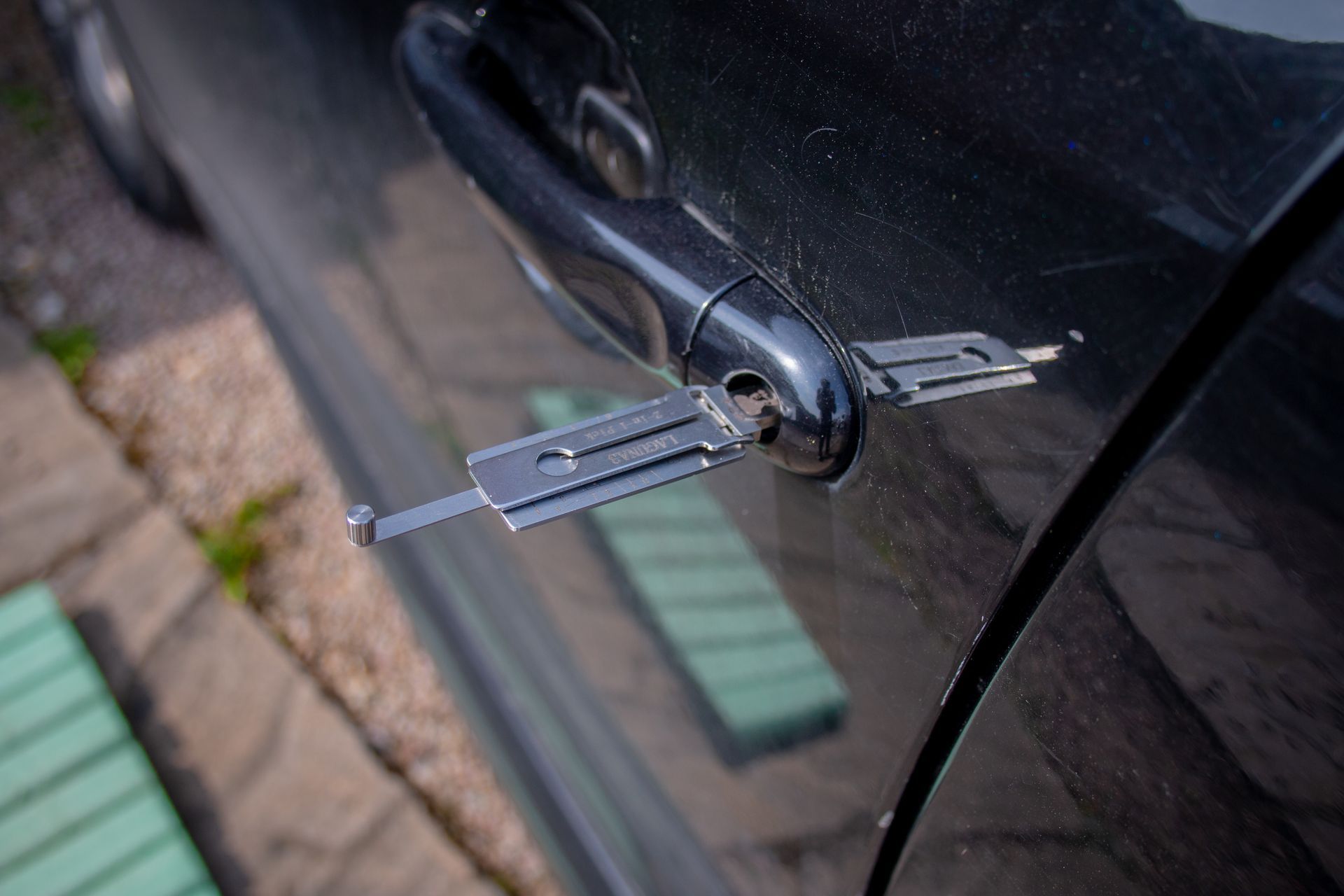
A key doesn’t usually snap without warning. Metal fatigues at a specific weak point — often right where the blade meets the head — after enough twisting, wiggling, or force applied to a lock that was already fighting back. What’s left is a stub of broken key sitting inside the cylinder, sometimes flush with the surface, sometimes barely visible, and a lock now jammed by the very key meant to open it. Liberty Locksmith removes what’s stuck and gets the lock working again without turning a snapped key into a replaced door or ignition.
How Extraction Actually Works
Removing a broken key fragment is a mechanical job, not a chemical one, and it starts with extractor picks built specifically for the purpose — thin, barbed or hooked tools sized to slide alongside the broken piece, catch it, and walk it back out along the same path the key traveled going in. A technician reads the break first: how much of the key is showing, which way the teeth are cut, and whether the fragment has rotated inside the cylinder, since all of that changes which extractor and which angle actually work. Done carefully, extraction leaves the internal wafers and pins undisturbed, so a lock that gave up a broken key can usually return to normal use once the fragment is out.
Skip the Glue
There’s a DIY fix that circulates online involving super glue, a toothpick, or a dab of epoxy worked onto the exposed end of a broken key in hopes of pulling the fragment out stuck to the glue. It’s worth saying plainly: don’t try this. Glue that doesn’t fully cure before it’s pulled can smear onto the internal wafers and pins, and glue that does cure can bond the fragment permanently in place, turning a quick extraction into a full cylinder replacement instead. Extractor tools work because they grip mechanically and can be adjusted mid-attempt; glue is a one-shot gamble with no way back if it goes wrong.
Door Lock, Ignition, or Trunk — Different Extractions
Where a key breaks changes how the extraction gets handled. A snapped key in a door lock is usually the most straightforward, with good access to the cylinder face and no surrounding electronics to work around. An ignition break is tighter and often shares space with steering-column components, so the extraction has to account for what’s packed in around the cylinder before anything gets pulled. A trunk lock break sits somewhere in between — generally decent access, though sometimes an unusual cylinder orientation depending on the vehicle. In every case the goal is the same: get the fragment out clean, then confirm the lock still cycles correctly afterward.
A Fresh Key, Cut on the Spot
Once a broken key is out, there’s still the matter of not having a working key anymore. When enough of the original pieces are recovered — or the vehicle’s key code can be pulled another way — we can often cut a replacement right there using the fragments as a reference for depth and spacing, without waiting on a dealership order. If a fragment is too damaged to measure accurately, we fall back on the same VIN-based origination used for a lost key, so either way you leave with a working key instead of just an empty cylinder.
Minnesota Cold Snaps Keys
Cold weather deserves its own mention here. Metal keys grow more brittle as the temperature drops, and a cylinder stiffened up with frost or ice adds resistance right where a key is already working hardest to turn. Push a slightly reluctant key through a frozen lock with extra force on a subzero morning, and the shoulder is exactly where it tends to give out. It’s a pattern specific to the coldest months in Minnesota, and one more reason not to force a key that’s fighting a lock rather than calling before it snaps.
Pricing a Broken Key Extraction
Extraction pricing depends on where the break happened and how deep the fragment sits — a door lock extraction with good access is generally a quicker job than one buried inside an ignition assembly. Whether a usable replacement key can be cut from the recovered pieces, or needs full origination from the VIN instead, factors into the total as well. You’ll get a price based on the specific break in front of the technician, not a flat number quoted before anyone’s actually looked at the lock.
We handle all of this on-site across the metro — see our service areas.
Frequently Asked Questions
Will the lock survive after a key breaks off inside it?
In most cases, yes. Extraction done with the right picks and tools removes the fragment without disturbing the internal wafers and pins, so a lock that gave up a broken key can usually go right back to normal use afterward. Damage tends to come from forcing the key or the fragment, not from a careful extraction itself.
Can you make a new key from the broken halves?
Often, yes. When enough of the original pieces are recovered, the fragments give a technician the depth and spacing needed to cut a replacement on the spot. If a piece is too damaged to measure accurately, we fall back on originating a key from the vehicle's own data instead, so either way you leave with a working key.
My key snapped off inside the ignition — is that different?
It's a tighter space to work than a door lock, since the ignition often shares room with steering-column components, but the extraction process itself is the same mechanical approach. What changes is the angle and the tools used to reach the fragment safely without disturbing what's packed in around the cylinder.