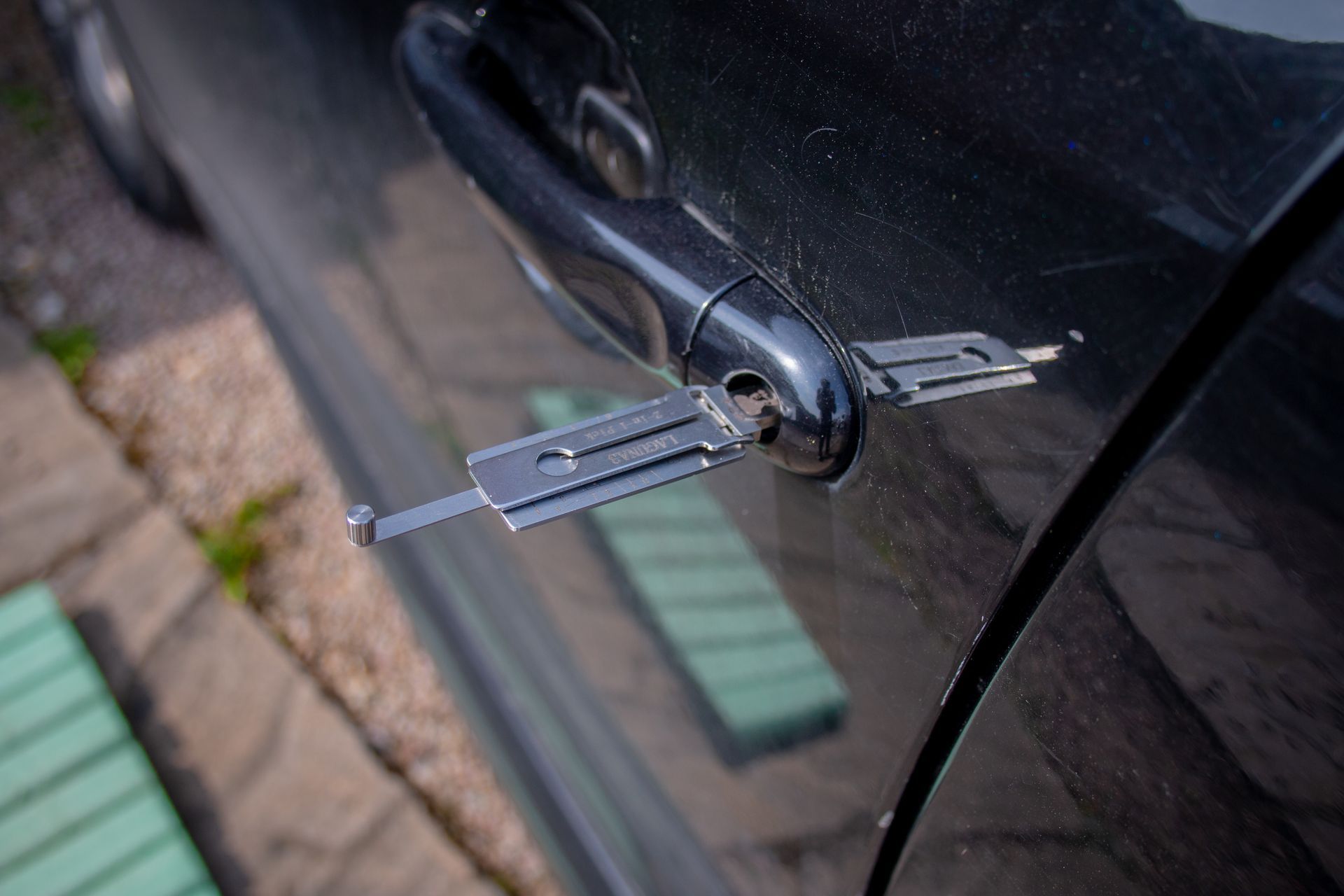
A car key rarely fails for just one reason. Some wear down after a decade in a pocket, the blade thinned until it barely grips the tumblers anymore. Others get replaced because a second driver in the household wants a set of their own instead of trading one key back and forth all week. A good number of calls come from someone who bought a used car with a single, worn-out key and wants a backup cut before that last one gives out too. Whatever brought you here, Liberty Locksmith handles the job at your vehicle, wherever it’s parked, rather than sending you to sit in a dealership lobby.
Basic Keys, Transponder Keys, and Proximity Fobs
Not every car key does the same job. Older vehicles and some base-model cars still use a plain mechanical key with no electronics inside it — cut the blade correctly and the car starts. Step up a generation and most vehicles built since the late 1990s carry a transponder chip embedded in the plastic head, a small radio tag that has to answer the engine computer’s coded challenge before fuel and spark are allowed to fire. Newer vehicles go further with proximity or “smart” keys that never touch the ignition barrel at all — the fob stays in a pocket or bag, a sensor in the cabin confirms it’s present, and a push button starts the engine. Each category needs different equipment and a different programming step, which is why a locksmith has to know the exact year and trim before cutting a blank.
Locksmith or Dealership?
A dealership can always cut and program a factory key, but that route usually means booking an appointment, getting the car to the service department, and waiting in a queue behind oil changes and warranty work. A mobile locksmith does the same programming with portable equipment, wherever your car already is — often the same day you call — and typically charges less for the identical result. That isn’t true across the board — a small number of very new or unusual models genuinely require dealer-only programming tools, and an honest locksmith says so upfront instead of taking the job and hoping it works out.
From VIN to a Working Key
Getting a key from scratch starts with confirming you’re the owner or otherwise authorized to have one cut, a check we run every time regardless of how routine the situation looks. The key gets identified from the vehicle’s VIN or an existing key code rather than guesswork, because two similar-looking blanks can cut to entirely different depths. Cutting itself happens on precision equipment capable of the laser and high-security tracks used on current platforms, not just the flat cuts of older designs. Once the blank is right, a transponder or proximity key still has to be paired to the immobilizer before the car will start — shaping the metal is only half the job on anything built in the last twenty-five years.
What Changes the Price
Three things drive most of the cost difference from one key job to the next. Vehicle year and make come first, since a basic blank and an encrypted proximity fob aren’t remotely the same in parts or labor. Key type matters separately — a plain mechanical key, a chip key, and a push-button fob each take a different amount of programming time. Blank availability rounds it out: common models keep popular blanks in stock, while a rare trim or an older import sometimes means special-ordering a part that isn’t already on the truck. None of that gets estimated in the abstract. A technician confirms your vehicle’s details and gives you a price for that specific key before cutting anything.
Makes We Match
Liberty Locksmith carries the cutting equipment and programming software to produce new keys for all vehicle types — cars, trucks, SUVs, and vans — across the range of makes seen daily in the Twin Cities, from mainstream domestic and Japanese brands through most European models. Coverage on the very newest model years and the most security-hardened luxury platforms can shift as manufacturers update their systems, so confirming your exact year and trim on the call saves everyone a wasted trip.
We handle all of this on-site across the metro — see our service areas.
Frequently Asked Questions
Do I need to bring in my old key?
It helps but isn't required. If you still have a key, even a badly worn one, we can often use it or the vehicle's key code to cut and program a match faster. If every key is gone, that's a different job — full origination from the VIN — which we also handle, just with a more thorough ownership check since there's no key in hand to reference.
Is a locksmith cheaper than the dealership?
Usually, yes, for the same programmed key, since we don't carry a dealership's service-department overhead. There are exceptions: a handful of very new or unusual models require dealer-only programming tools, and we'll tell you upfront if your vehicle falls into that category rather than taking the job and hoping for the best.
How long does a car key replacement take?
It depends on the key type and the vehicle. A basic mechanical key is typically a quick cut-and-done job. A transponder or proximity key adds a programming step that takes longer, and an unusual or older model can take longer still if a blank has to be sourced. A technician can give you a realistic sense of timing once they know your exact vehicle.
Which vehicle makes do you cover?
We cut and program keys across most mainstream domestic, Japanese, and European makes on the road in the Twin Cities. Coverage on the newest model years and some higher-security luxury platforms can vary by manufacturer, so it's worth a quick call with your year, make, and trim to confirm before you plan around it.