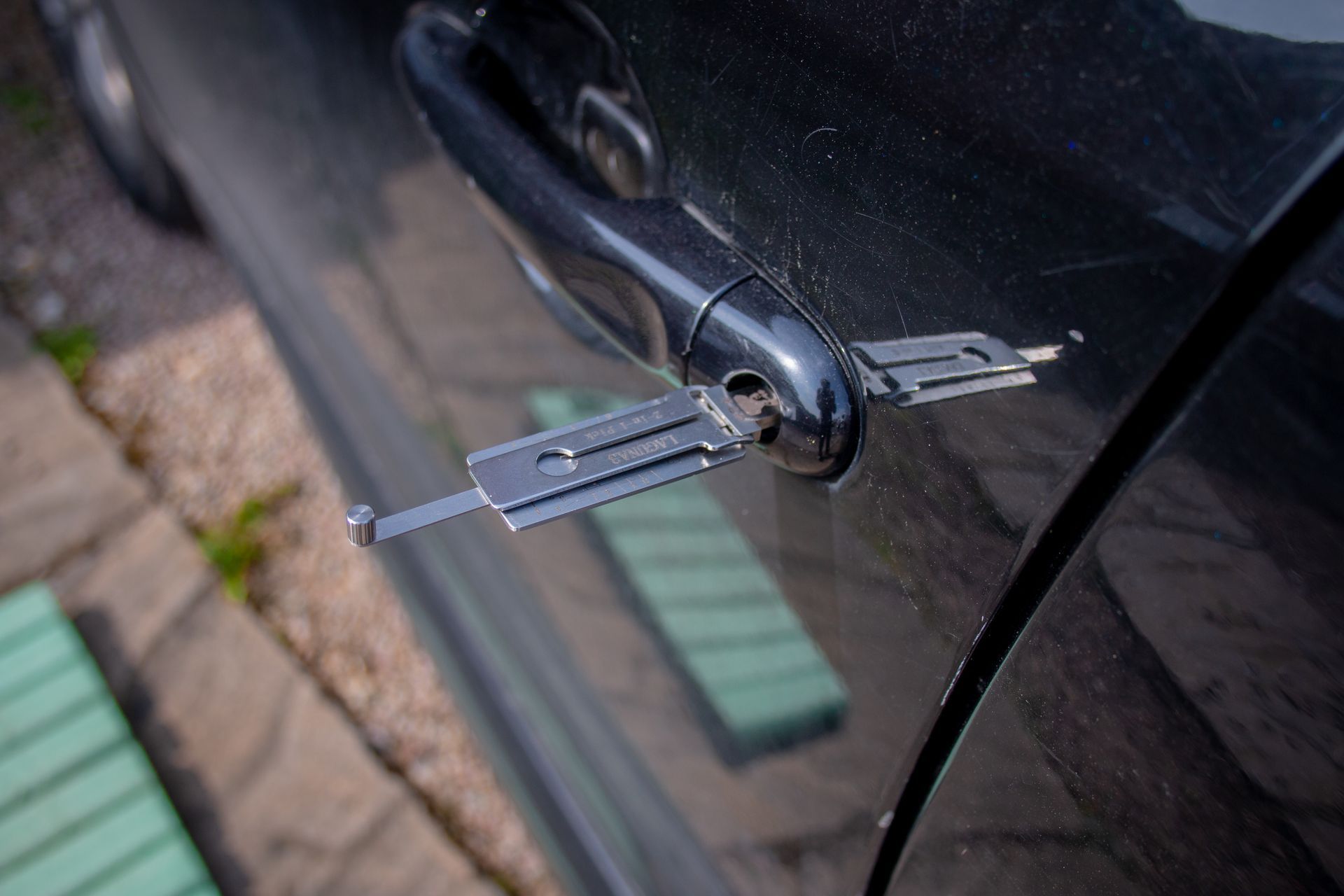
Every transponder key has a passive chip embedded in its plastic head, and that chip is the only thing standing between a correctly cut blade and an engine that actually starts. It doesn’t broadcast anything on its own — it just answers a coded challenge sent out by the car’s immobilizer the moment the key goes into the ignition or gets recognized nearby. Get that handshake right and the car starts like nothing happened. Skip it, or get it wrong, and you’ve got a key that turns the lock while the dash flashes a security light and the engine cranks without ever catching.
Why a Hardware-Store Copy Won’t Start the Car
This is the single most common transponder complaint we hear: someone gets a key copied at a hardware store or a big-box kiosk, the new key looks perfect and even turns the lock fine, but the car flatly refuses to start. What happened is straightforward once you know how transponders work. Those kiosks cut the metal shape of the key accurately, but most of them have no way to read, clone, or program the chip sitting inside the head. The result is a key that’s mechanically correct and electronically blank, indistinguishable to the immobilizer from having no key present at all. It isn’t a sign anything is broken on the car — it’s a sign the copy skipped the half of the job that actually matters for starting the engine.
Cloning a Chip vs. Programming Through the Diagnostic Port
There are two real paths to a working transponder key, and which one applies depends on the platform. Cloning copies a working chip’s data directly onto a new transponder, and it works well when there’s a good donor key in hand and the vehicle’s system supports that approach. The other path goes through the car’s onboard diagnostic port, using programming equipment that talks to the immobilizer computer directly and adds a new key to its accepted list, sometimes without needing the old chip involved at all. Newer vehicles increasingly favor the diagnostic-port method or require it outright, since it resists tampering far better than straight cloning — one more layer as security has tightened generation over generation.
Not Every Key Can Be Cloned
A key sitting on a hardware-store rack can’t tell you whether your particular vehicle’s chip is cloneable, and the honest answer is that some aren’t. Certain encrypted, rolling-code systems on newer and higher-security vehicles are built specifically to resist straightforward cloning, which is exactly why the diagnostic-port method exists as the fallback. A locksmith who tells you upfront that your car needs the longer diagnostic-based process instead of a quick clone isn’t upselling — that’s simply what the platform requires, and pretending otherwise just wastes a visit.
Fixing a Copied Key That Won’t Start the Car
If you’re holding a key that turns the lock but leaves the engine cranking without starting, the fix usually isn’t cutting yet another blade — it’s programming the chip that’s likely already sitting correctly inside the key you have. We can often test the existing key first rather than assuming it needs full replacement, since a mechanically sound key with an unprogrammed chip just needs that one remaining step finished.
What Affects the Cost
Transponder programming cost tracks mainly with which of the two methods your vehicle needs. Cloning from a working donor key is generally the quicker, less involved job. Diagnostic-port programming, especially on a vehicle that requires extra security access before the immobilizer accepts a new key, takes more time and more capable equipment, and the price reflects that difference. Vehicle make plays in too, since manufacturers vary widely in how tightly they lock down their immobilizer systems. You’ll get a number based on what your specific car requires, confirmed before any programming begins.
We handle all of this on-site across the metro — see our service areas.
Frequently Asked Questions
What's the difference between a chip key and a regular key?
A regular mechanical key only has to match the shape of the lock — cut it right and it turns. A transponder, or chip, key also has to answer a coded signal from the car's immobilizer before the engine will fire. The two look nearly identical, but only one of them can actually start a modern vehicle on its own.
Can any transponder key be cloned?
Not always. Cloning copies a working chip's data onto a new transponder and works well on many platforms, but some newer, more security-hardened vehicles use encrypted, rolling-code systems built specifically to resist it. On those, programming through the car's diagnostic port is the correct method instead, not a shortcut around a harder job.
My copied key turns the lock but won't start the car — why?
That's almost always a hardware-store or kiosk copy that cut the metal shape correctly but never touched the chip inside the head. The immobilizer sees no valid transponder response and blocks the engine, even though the key looks and feels correct. Programming the chip that's likely already in that key usually fixes it without cutting anything new.