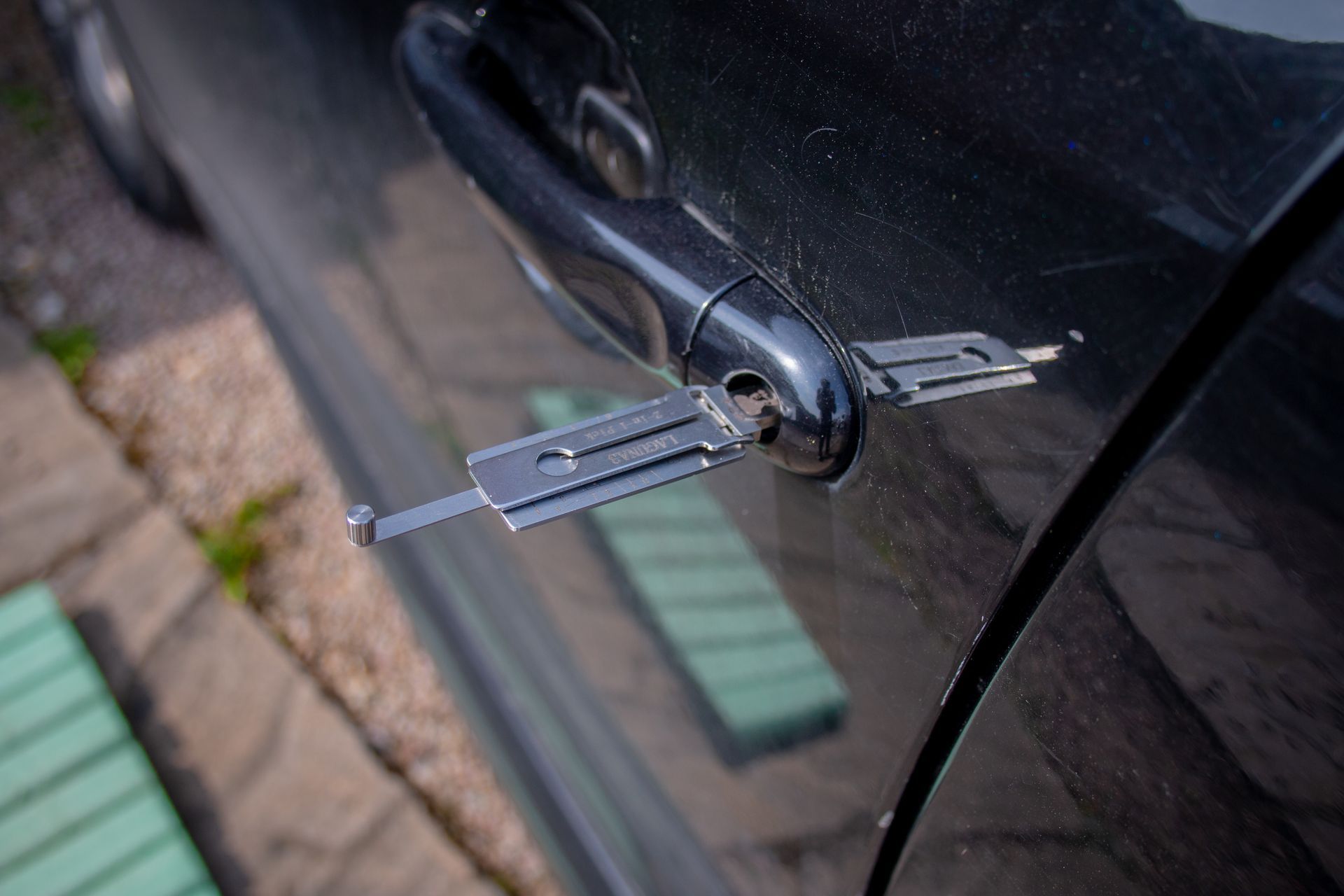
Car door locks fail more gradually than most people notice. A cylinder that needs a little extra key-wiggle this winter needed slightly less last winter, and by the time the key won’t turn the door at all, the wear has usually been building for years. Other failures are sudden — a break-in attempt that leaves the cylinder punched or pried, a lock button that stops responding overnight, a linkage that lets go so the handle moves but nothing happens. Liberty Locksmith repairs and replaces car door locks on-site across the metro, sorting mechanical faults from electrical ones before anything gets swapped.
Worn, Jammed, and Frozen Door Cylinders
The keyed cylinder in a car door lives a hard life: exposed to road grit, car-wash soap, and Minnesota’s full temperature swing, all while getting turned thousands of times over a vehicle’s lifespan. Wear inside the cylinder shows up as a key that needs jiggling or catches partway through its turn. Jamming often traces to debris or corrosion rather than wear — a cylinder packed with years of fine grit stops moving freely no matter how good the key is. And in winter, moisture that seeps into the keyway during a thaw refreezes hard once the temperature drops again, leaving a lock that was fine on Tuesday sealed solid Wednesday morning. A cylinder that freezes repeatedly is telling you its seals or the surrounding weatherstripping have failed, and fixing that beats a season of de-icer.
Linkage or Actuator — Mechanical vs. Electrical
Inside the door panel, two very different systems can produce the same symptom of a door that won’t lock or unlock. The mechanical side is rods and clips — the linkage connecting the cylinder, handle, and latch — and a popped clip or bent rod is a hardware fix squarely in a locksmith’s lane. The electrical side is the actuator, the small motor that responds when you press the fob or the door switch. We’ll tell you honestly which side of the line your problem falls on: cylinder, linkage, and latch-hardware work we handle on-site, and diagnosing a failed actuator is within reach too, but deep electrical faults in a door’s wiring harness or body-control module belong with an auto electrician or body shop, and we’d rather say so than bill hours poking at someone else’s specialty.
Rekeying After a Break-In
A break-in leaves two separate problems, and the visible damage is often the smaller one. The cylinder itself may be punched, pried, or destroyed and need repair or replacement — that part is obvious. Less obvious: if a key or garage remote was sitting in the car when it was entered, or a valet key vanished from the glovebox, whoever took it can come back and open the car legitimately. Rekeying the door cylinders — changing what key operates them without replacing the whole assembly — closes that door, so to speak, and pairs naturally with the physical repair in a single visit.
One Key for Every Door
Cars leave the factory with a single key operating the ignition and every keyed lock, but years of piecemeal repairs can break that arrangement — a junkyard cylinder swapped in after a break-in, a replacement door from a collision repair, each carrying its own key. Part of proper car lock repair and replacement is putting that back to rights: a repaired or replacement door cylinder can typically be keyed to match your existing ignition key, so one key runs the whole car again the way it was designed to.
What Shapes the Cost
Door lock work varies more than most automotive locksmith jobs because the failure could sit in several different places. Whether the fix is cleaning and lubricating a gritted-up cylinder, replacing the cylinder outright, or getting inside the door panel to a linkage problem changes the labor involved. Vehicle make matters too — some door panels come apart in minutes while others are genuinely tedious — and matching a replacement cylinder to your existing key adds a keying step. A technician confirms what’s actually wrong and quotes the repair before opening anything up, so the price reflects the fault in front of them rather than a guess made over the phone.
We handle all of this on-site across the metro — see our service areas.
Frequently Asked Questions
My door lock is frozen right now — anything I can try before you arrive?
A commercial lock de-icer, applied into the keyway and given a minute to work, is the safest self-help option. Warming the key gently before inserting it can also help. What to avoid: hot water, which refreezes into a worse ice layer, and muscling the key through the resistance, which is how keys end up snapped off inside the cylinder.
Can one key work my doors and the ignition again?
Usually, yes. When a door cylinder gets replaced or repaired, it can typically be keyed to match the ignition key you already carry, restoring the one-key setup the car came with from the factory. It's worth asking for specifically, since a mismatched replacement cylinder is how cars end up with two keys doing one car's job.
After a break-in, what should actually be replaced?
It depends on what was damaged and what was taken. A pried or punched cylinder needs repair or replacement outright. If a key was inside the car when it was stolen, rekeying the locks matters more than fixing cosmetic damage, since whoever has that key can walk back up to the car. A technician can assess both sides on-site.