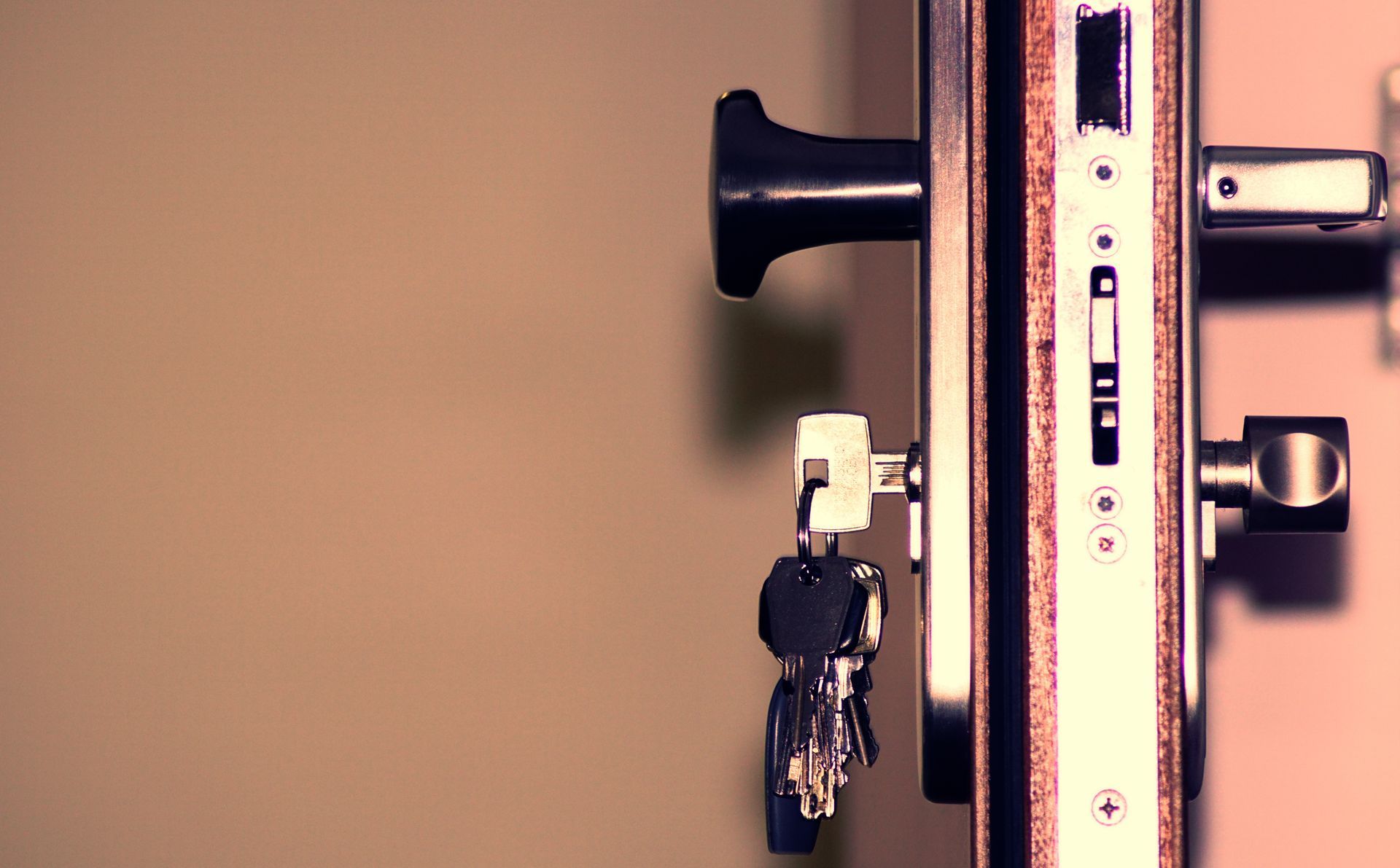
A door with only a spring-latch knob lock is easier to force open than most homeowners realize — a knob latch is built for convenience, not resistance. Adding a deadbolt changes that with a bolt that extends deep into the frame and doesn’t retract under pressure the way a spring latch does. A lot of older housing stock around the Twin Cities was built with just that knob latch on the front door, and bringing it up to a proper deadbolt — or upgrading one that’s already there to a stronger grade — is a fresh-bore job Liberty Locksmith does on-site with the tools for a clean install.
Boring a Fresh Deadbolt Into an Existing Door
Installing a deadbolt where none exists starts with measuring the door for the right backset — the distance from the door’s edge to the center of the bore — so the new lock lines up correctly with the frame. From there a technician drills the face bore through the door and the edge bore for the bolt itself, then chisels out the mortise pockets for the bolt and the strike plate. Portable drills and hole saws built for lock installation make this a single-visit job on most standard door thicknesses, typically wrapped up well within an hour once the door and hardware are confirmed.
Single Cylinder vs. Double Cylinder
A single-cylinder deadbolt takes a key from outside and turns with a simple thumb-turn from inside — no key needed to get out, which matters more than it might seem during a fire or any situation where getting out fast counts. A double-cylinder deadbolt requires a key on both sides, which closes off one specific risk: a door with glass near the lock that someone could break and reach through to turn a thumb-turn. That security benefit comes with a real trade-off, though, since an occupant without the key handy could be genuinely delayed getting out in an emergency, and some local codes restrict or discourage double-cylinder deadbolts on doors used for required egress. It’s worth weighing both sides honestly rather than defaulting to whichever sounds more secure on paper.
Grade 1 and a Reinforced Strike
For a primary entry door, a Grade 1 deadbolt is worth the step up from the lighter-duty grades — it’s built to resist more force and more cycles of daily use before anything gives. The bolt itself is only half the equation, though. A stock strike plate held by short screws driven into thin jamb wood gives way under a kick far more easily than most people expect. Swapping in a reinforced strike plate secured with three-inch screws that reach past the jamb into the framing behind it turns the doorframe itself into part of the defense, not just the bolt.
Works on Wood, Metal, and Fiberglass Doors
Fresh-bore deadbolt installation isn’t limited to wood doors. Metal and fiberglass slabs take a deadbolt the same way, generally with the same bore-and-mortise approach, though a technician may adjust the bit or add reinforcement around the bore on a metal-skinned door to avoid stressing the material. Whatever the door is made of, this covers the same ground as a high-security deadbolt upgrade for homes — a stronger bolt, a properly reinforced strike, and a door that resists forced entry meaningfully better than a spring latch alone ever could.
What Drives the Installation Price
Deadbolt installation pricing depends mainly on whether it’s a fresh bore into a door with no existing deadbolt or an upgrade to hardware already in place, since a fresh bore involves more cutting and fitting, and it depends on the grade of hardware chosen and whether a reinforced strike plate is part of the job — all of it confirmed against the actual door before any drilling starts.
We handle all of this on-site across the metro — see our service areas.
Frequently Asked Questions
Can you add a deadbolt to a door that's never had one?
Yes, that's a standard fresh-bore installation. A technician measures the door for the correct backset, bores the face and edge holes, and cuts the mortises for the bolt and strike, all on-site with portable tools built for exactly this job — no need to swap the entire door for one that comes pre-drilled.
Single cylinder or double cylinder — which is safer?
Single cylinder, with a thumb-turn on the inside, is the safer default for most homes because it lets anyone inside exit quickly without hunting for a key during an emergency. Double cylinder, requiring a key on both sides, mainly earns its place on doors with glass close enough to the lock that someone could otherwise break it and reach straight through to a thumb-turn — and it noticeably slows how fast the door opens from inside during a fire or other emergency.
Will a deadbolt work on a metal or fiberglass door, or does it need to be wood?
Deadbolts install on wood, metal, and fiberglass doors alike — the bore-and-mortise process is largely the same, though metal and fiberglass slabs sometimes call for slightly different bits or reinforcement around the bore to avoid stressing the door skin. A technician adjusts the approach to the material rather than treating every door the same.