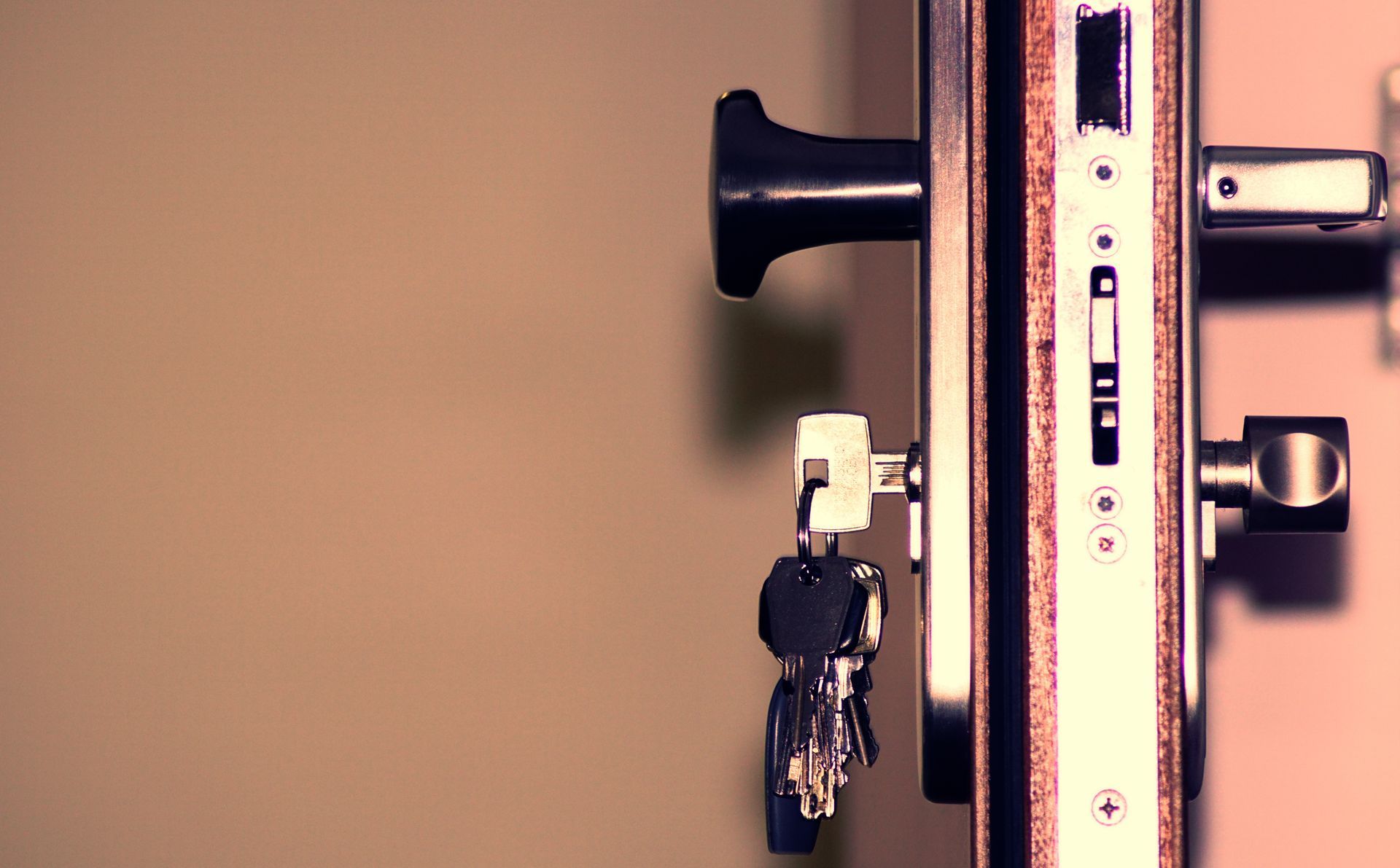
A locked front door doesn’t check the clock, and neither do we. Keys left on the kitchen counter, a door that locks itself on the way out, a garage side door that swings shut behind you — the ending is the same: standing outside your own home with no way in. Whichever door it was, a technician from Liberty Locksmith gets sent to the house, the garage, or the apartment building with tools built to open a normal residential lock without turning a lockout into a repair bill.
Picking and Bypassing Before Anything Gets Drilled
Most home lockouts open with tools built to work with the lock, not against it. A technician starts by identifying the cylinder — brand, wear, whether it’s the standard pin-tumbler design most residential doors use — then works it with picks or bypass tools sized to that keyway. Done correctly, the lock cycles normally afterward, and original keys, if they turn up later, still work in it. Drilling exists as a fallback, not an opener: it comes into play when a cylinder is already damaged inside, jammed by a snapped key, or built with security features that make picking impractical. Even then, the drilled-out lock is typically replaced before the technician leaves rather than handed back broken.
Garage Doors and Apartment Buildings
A house lockout covers more ground than the front door. Side and back garage entrances get locked out the same as any exterior door, sometimes with the added twist that the garage remote is sitting on the seat of a car parked inside — we work the door’s own lock rather than depending on the opener. Apartments add a layer of their own: a locked unit door sitting behind a locked building entrance. We get through both, using a buzzer or call box when the building has one, or coordinating with a property manager or an after-hours contact, before working the unit door with the same tools used on any house.
Confirming It’s Actually Your Home
Before any tool touches the lock, a technician checks that the address matches the person standing in front of it. A driver’s license with the right address is the simplest version, but mail, a lease, or a utility bill works too, and a phone call from a landlord or roommate covers the gap when your ID hasn’t caught up to a recent move yet. It’s a short step, and it protects you as much as it protects the lock — nobody wants a stranger let into their home because a technician skipped it.
Renters and Landlord Authorization
Renters run into a wrinkle that owners usually don’t: the name on the lease might not match your ID, or you might not be the one who signed it at all. When that’s the case, a call to the landlord or property manager confirming you’re a resident is generally enough to proceed, and it’s worth keeping that contact’s number handy rather than hunting for it while standing outside in the cold. Property managers who’ve dealt with locked-out tenants before usually know exactly what’s needed and can confirm residency in a couple of minutes over the phone.
What a Lockout Call Costs
Pricing on a house lockout comes down to a handful of factors: how the lock is built, since a basic cylinder is a quicker job than a worn or high-security one; how many doors are actually involved once a garage or a building entrance enters the picture; and the time of day, because an overnight call runs differently than a weekday afternoon. Knowing the lock type — deadbolt, knob, or something with a keypad — and roughly how many doors are locked helps dispatch give you a realistic sense of what the job involves before a technician’s even on the road, with the actual price confirmed once they’re looking at the lock in person.
We handle all of this on-site across the metro — see our service areas.
Frequently Asked Questions
Will you damage my lock to get me back in?
Almost never. A technician starts with picking or bypass tools matched to your specific lock, which open the door without marking the cylinder or the frame. Drilling only comes out when a cylinder is already broken inside or built with anti-pick features that make picking impractical, and even then, the lock is replaced as part of the same visit in nearly all cases, rather than left in pieces.
How do I prove I actually live here before you'll open the door?
A driver's license with a matching address usually settles it, and a lease, a piece of mail, or a utility bill works just as well. If your ID hasn't caught up to a recent move, a landlord or roommate willing to vouch for you over the phone is usually enough to move forward.
I'm locked out of my apartment and the building entrance is locked too. What happens?
We handle both doors. If there's a buzzer or a call box at the main entrance, we use it, or coordinate with whoever's reachable — a neighbor, a property manager, or an after-hours line the building keeps on file. Once we're inside, the unit door gets the same non-destructive approach as any house lockout.
It's 3am. Are you actually open, or is '24/7' just marketing?
We're actually open. Dispatch answers calls around the clock, and a technician gets sent out at 3am the same way one would at 3pm. What changes overnight is how many technicians are on the road and what the weather and traffic look like, so you'll get an honest arrival window when you call rather than a guess.