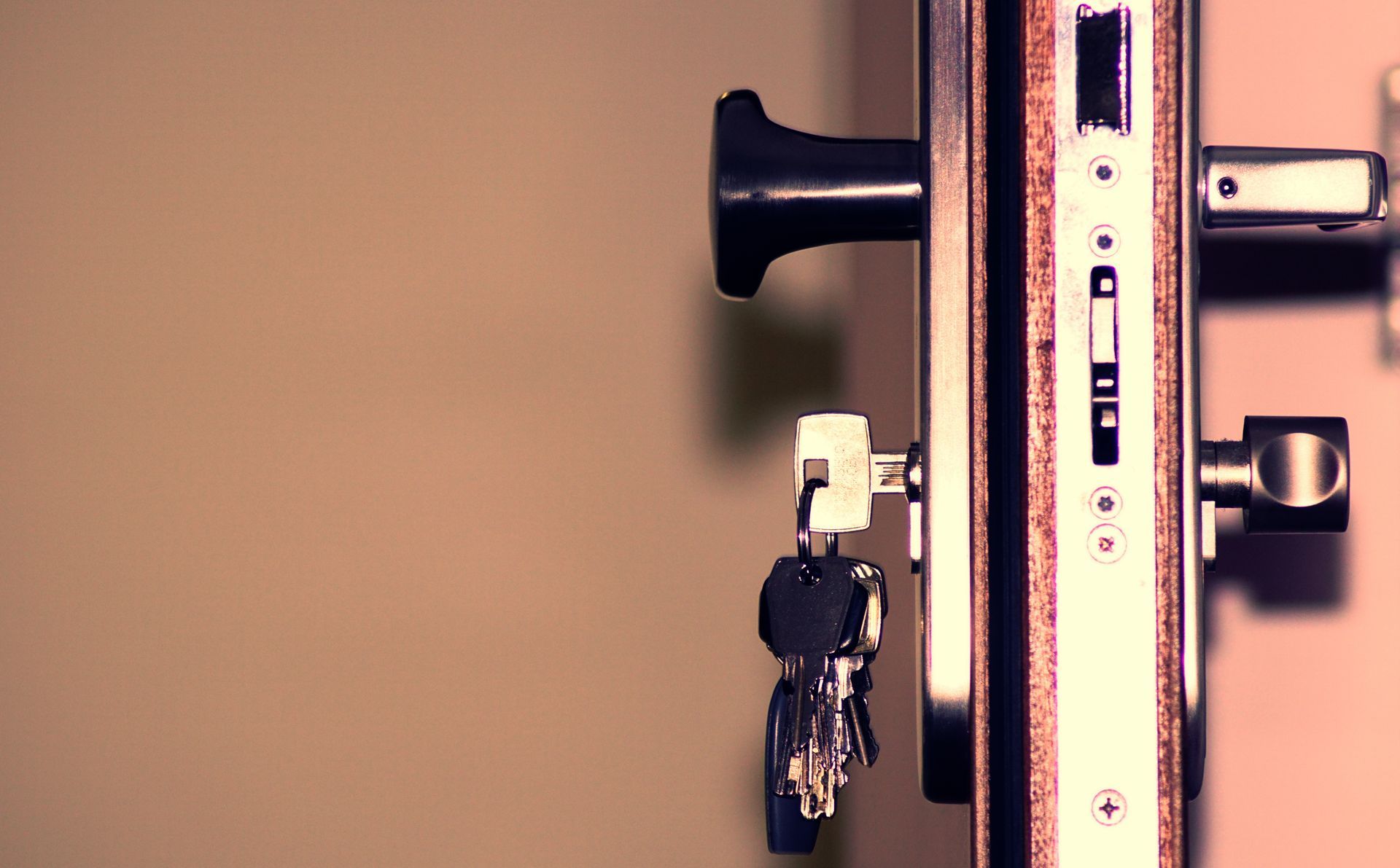
Mailbox and cabinet locks are small, but a locked-out one is genuinely inconvenient — mail piling up out of reach, or a file cabinet holding something you need right now. Liberty Locksmith handles both: lock swaps and lost-key openings on privately owned mailboxes, and the same work on cabinet, desk, and file-cabinet locks around a home office.
Private Mailboxes We Service
A standard curbside mailbox on a post at a single-family home is a private fixture, owned by the homeowner, and it’s ours to work on — a lost-key opening, a new lock if the old one has seized or been damaged, or a rekey if you’d rather not replace the hardware outright. Some apartment and condo buildings also use individually keyed mailboxes installed and owned by the property itself rather than the postal service, and those fall into the same category: private hardware that a locksmith can legally service, pick, rekey, or replace as needed.
USPS-Owned Cluster Boxes Are a Different Matter
Not every locked mail compartment is fair game, and this distinction matters. Many newer developments use cluster box units — the freestanding banks of individually locked compartments, often called CBUs, that sit at the curb serving a whole street or complex. Those units, and the locks on them, belong to and are serviced exclusively by the United States Postal Service, not the property owner and not a locksmith. If you’re locked out of a compartment in one of these units, the right call is to your local post office, which handles lost-key replacement and lock service for its own boxes directly. It’s worth knowing which kind of mailbox you actually have before assuming a locksmith can help — a quick look usually makes it obvious which category it falls into.
Cabinet, Desk, and File-Cabinet Locks
Home offices tend to accumulate locked furniture over the years — a filing cabinet holding tax documents, a desk drawer with a lock nobody’s opened in ages, a small lockbox tucked in a closet. These generally use compact pin-tumbler or wafer locks, mechanically similar to a door lock just built at a smaller scale, and the same non-destructive approach applies: picking or bypassing the lock rather than forcing or prying the drawer open, which tends to damage the furniture along with the lock. When the lock itself has failed rather than just lost its key, it can be replaced in the same visit.
Pricing Mailbox and Cabinet Work
Pricing on mailbox and cabinet locks depends on the lock’s condition and how it’s built — a straightforward lost-key opening on a lock in good shape is quicker than one that’s rusted, damaged, or missing parts. Whether the job ends with the existing lock reused or a new one installed factors in as well. A technician looks at the actual lock before quoting the job, the same as with any other service.
Small Locks, Same Care as a Front Door
It’s tempting to treat a mailbox or a desk drawer as too minor to bother calling a locksmith about, and plenty of people reach for a screwdriver or a crowbar first instead. That’s usually how a simple lost-key job turns into a damaged mailbox post or a cracked drawer front that now needs actual repair on top of the lock. A technician brings the same non-destructive picking and bypass approach to a small lock that gets used on any house or car — the size of the lock doesn’t change the logic of getting it open without wrecking whatever it’s mounted to.
When It’s Not Actually a Lock Problem
Every so often what looks like a stuck lock on a mailbox or a filing cabinet turns out to be something else — a bent door on a mailbox that’s been backed into, or a metal cabinet drawer swollen or knocked out of its track rather than genuinely locked. A quick look sorts out whether the lock itself is the issue or whether the fix is closer to a minor repair on the box or the furniture around it, so you’re not paying for lock work that wouldn’t have solved the actual problem anyway.
We handle all of this on-site across the metro — see our service areas.
Frequently Asked Questions
I lost my mailbox key. Can you help?
Yes, for a privately owned mailbox — a curbside post box at a single-family home, or an individually keyed box in a building's mail room that the property owns rather than the postal service. A technician can pick or bypass the lock, cut a new key, or swap the lock outright if it's worn out.
The cluster box at the curb is locked and I don't have my key. Who do I call?
That's a call to your local post office, not a locksmith. Cluster box units — the banks of locked compartments common in newer developments — are owned and serviced exclusively by the United States Postal Service, and a locksmith isn't able to legally open or rekey a compartment that belongs to USPS. They handle lost-key replacement for their own boxes directly.
My file cabinet is locked and I don't have the key. Can you open it?
Usually, yes. File cabinet, desk, and other home-office furniture locks tend to use small pin-tumbler or wafer mechanisms similar in principle to a door lock, just scaled down, and most open with the same kind of non-destructive picking or bypass technique. If the lock itself is worn out afterward, it can be replaced on the spot.