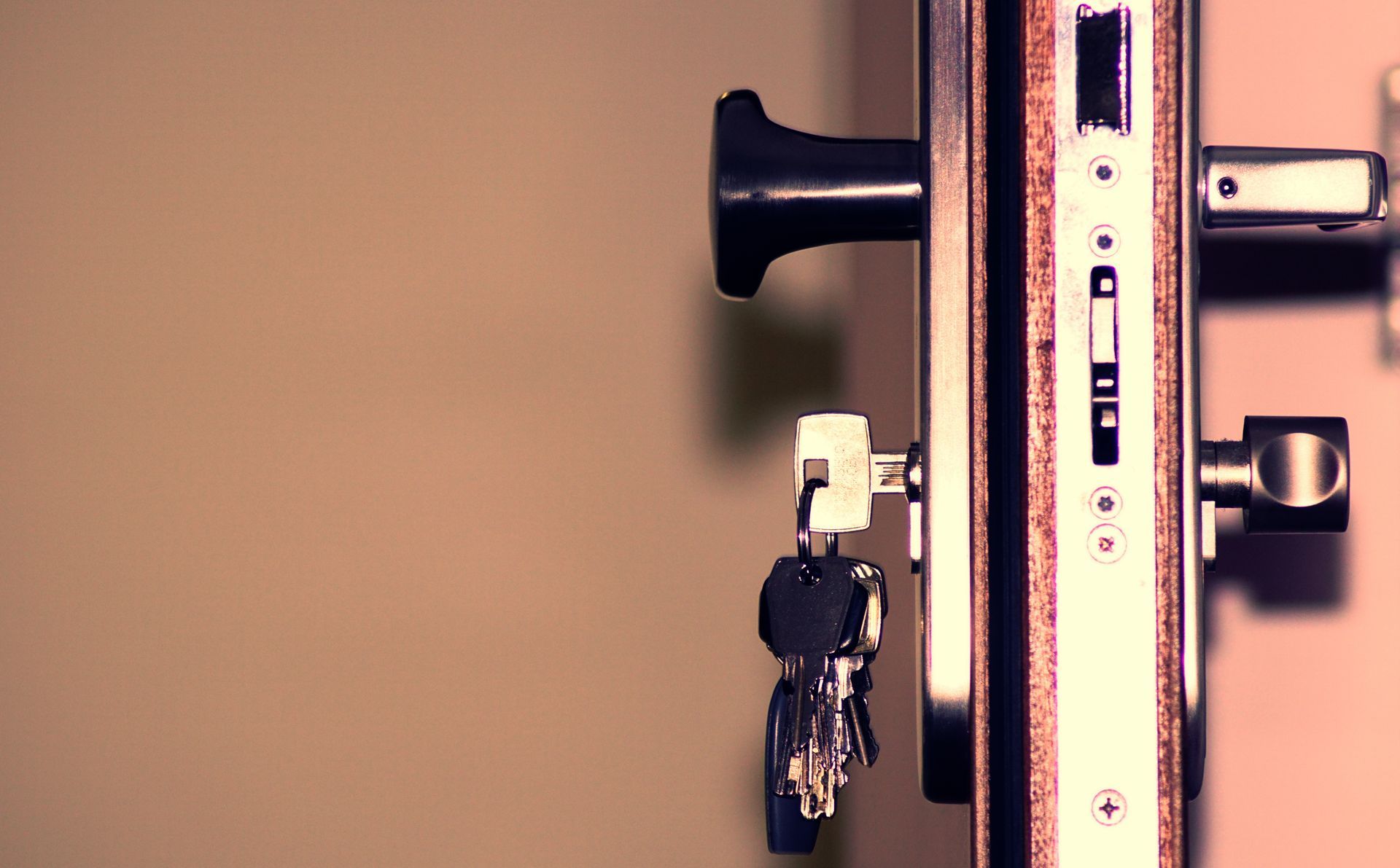
A lock rarely fails all at once. It gets stiffer over a few months, or a door that used to swing shut and lock cleanly starts needing a shoulder against it first. Liberty Locksmith repairs the hardware that’s already on your door — cylinders, latches, strike plates — rather than treating every sticking point as a reason to install something new.
Sticky and Seized Cylinders
A cylinder that used to turn smoothly and now fights the key is one of the most common repair calls we get. Dust, grit, and old lubricant left to gum up inside the keyway are frequent culprits, and the fix is often as simple as clearing that out and working in a dry lubricant like graphite or PTFE, rather than the household oil that tends to attract more grime than it clears. When lubrication alone doesn’t fix it, worn pins or a spring that’s lost tension inside the cylinder are the next likely cause, and those get replaced rather than fought with a key that’s already working too hard.
Minnesota Freeze-Thaw and a Door That Won’t Latch
Minnesota winters do something to houses that milder climates rarely see: the ground under a foundation freezes, heaves, and then thaws again as the season turns, and that movement travels up into door frames more than most homeowners expect. A latch that met the strike plate cleanly in the fall can be a fraction of an inch off by the depths of winter, or a door that used to swing shut on its own starts needing a firm push once the frame has shifted. This isn’t a lock defect — it’s the house settling with the season — and it tends to show up gradually, one degree of misalignment at a time, rather than as a sudden failure.
Strike-Plate Adjustment
Once a door and its frame have shifted, the fix usually lives at the strike plate rather than inside the lock. Repositioning the plate, deepening or filing the opening it forms, or swapping in longer screws that bite further into the framing behind the jamb brings the latch and the strike back into alignment without touching the lock mechanism at all. It’s a small adjustment with an outsized effect: a door that’s been slamming shut on the second try often closes cleanly on the first attempt again once the plate lines up properly.
Repair or Replace on an Older Lock
Age alone isn’t a reason to replace a lock that’s otherwise sound. If the housing is structurally solid and the trouble is wear, dirt, or a frame that’s shifted out from under it, repair is generally the faster and more direct fix. Replacement earns its place when a lock is visibly pitted or corroded, when internal parts have worn past what cleaning and adjustment can restore, or when a lock is old enough that matching parts are genuinely hard to find. A technician who’s looked at the actual hardware can tell you honestly which situation you’re in.
What a Repair Visit Costs
Repair pricing depends on what’s actually wrong — a lubrication and adjustment visit is a quicker job than one involving worn internal parts that need replacing, and a strike-plate fix is usually simpler than either. How many doors need attention factors in too, since a house with multiple sticking locks after a hard winter is a different job than a single stubborn deadbolt.
A Yearly Check Beats an Emergency Call
Most of what shows up as an emergency repair call was a small, ignorable annoyance a season earlier — a key that turned a little stiffly in October is often the same lock refusing to turn at all by January. A short once-over before winter sets in, checking that cylinders turn freely and strike plates still line up after a summer of humidity and a fall of shifting temperatures, catches most of that early. It’s a smaller visit than waiting for a lock to fail outright, and it tends to be a lot more convenient than discovering the problem on a subzero morning on the way out the door.
We handle all of this on-site across the metro — see our service areas.
Frequently Asked Questions
My key is hard to turn — what's wrong?
Usually either a dry cylinder that needs lubrication, or pins and springs inside that have worn or gathered enough grit over the years to resist turning smoothly. A technician can generally tell which it is with a quick look at the lock, and dry cylinders often improve immediately once the right lubricant gets worked in.
My door won't latch properly once winter hits — why?
In Minnesota, that's often the house itself moving with the season rather than the lock failing. Freeze-thaw cycles shift foundations and door frames slightly as the ground heaves and settles, and a latch that lined up perfectly in July can end up a fraction of an inch off from the strike plate by January. Adjusting the strike plate's position usually solves it without touching the lock itself.
Is it worth repairing an old lock, or should I just replace it?
If the hardware is structurally sound and the problem is wear, alignment, or a dirty cylinder, repair is usually the quicker and less expensive path. Replacement makes more sense once a lock is visibly pitted, corroded, or built around parts that are hard to source anymore — a technician can tell you honestly which category yours falls into rather than defaulting to either answer.