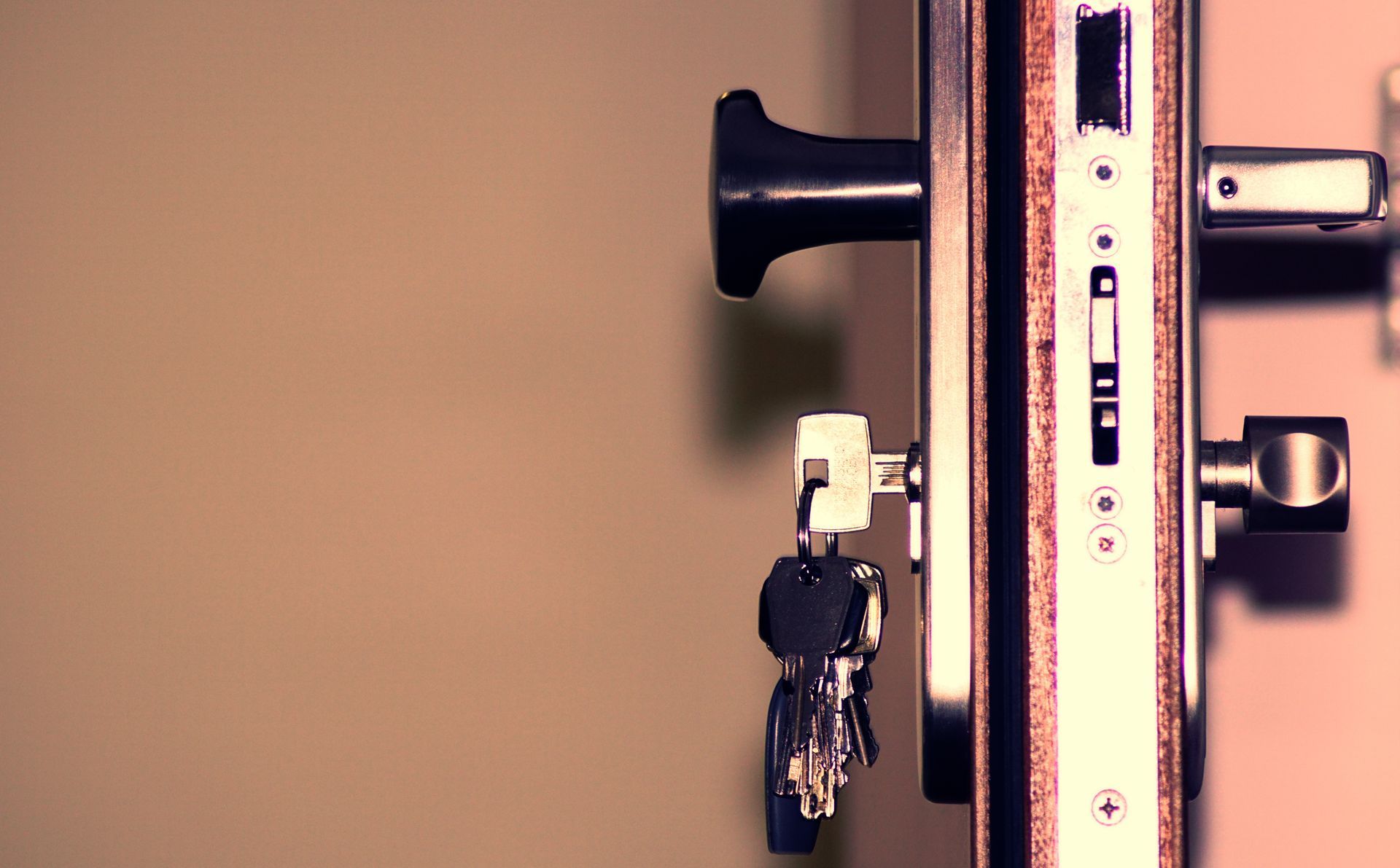
Rekeying is a smaller job than it sounds like from the outside, and a much bigger relief than its size would suggest. Instead of replacing the lock, a technician changes what’s inside it so your old keys stop working and new ones take over — same hardware on the door, same handle, same finish, entirely different keys. That hardware never leaves the door: the whole swap, from pulling the cylinder to fitting new pins, happens on-site with Liberty Locksmith, whether it’s one troublesome door or every exterior lock in the house.
What Actually Happens Inside the Lock
A pin-tumbler lock — the kind on most home doors — holds a stack of spring-loaded pins inside the cylinder, cut to specific heights that only your particular key lifts into alignment. Rekeying means pulling the cylinder plug, swapping that pin stack for a new set cut to a different key, and putting the plug back in. The lock body, the handle, the strike plate, and everything visible on the door stays exactly as it was. What changes is buried inside the cylinder: the old key, no matter who’s holding it, no longer lifts the pins to the right height, and it simply stops working.
When Rekeying Beats Replacing
A handful of situations call for new keys without calling for new hardware. Moving into a house means an unknown number of keys are floating around from a previous owner, a prior tenant, or a real estate agent, and a rekey closes all of them out at once. A lost key does the same thing without a burglary attached to it — you don’t need to know where it went, only that it shouldn’t open your door anymore. A roommate or partner moving out, or a breakup where keys never got returned, is the same problem in a different setting. And after contractors have been through the house with a lockbox key or a key handed off for access, a rekey resets things cleanly once the work is done.
One Key, Mismatched Brands
A lot of houses end up with a mix of brands on different doors — a front door from one manufacturer, a back or side door from another, sometimes a garage entrance from a third. Because pin-tumbler mechanics are broadly similar across residential brands, a rekey visit can usually combinate all of them to a single key, so you’re not juggling a separate key for every door. It’s one of the more underused parts of the service: most people assume mismatched hardware means mismatched keys forever, and it doesn’t have to.
What Rekeying Doesn’t Change
If you like the hardware on your doors — the finish, the handle style, the feel of the lock — rekeying leaves all of it untouched. Nothing gets removed from the door except the small internal pin stack, and nothing gets installed that changes how the lock looks or operates day to day. It’s the option for anyone who wants new keys without also shopping for new hardware, or who simply doesn’t want to deal with a full lock swap for a problem that a much smaller fix solves.
What Affects a Rekey Price
Rekey pricing tracks mainly with how many doors are involved and whether they’re being combinated to a single key, since each cylinder is its own small job even when the visit covers the whole house. A single standard residential cylinder sits at the affordable end of lock work; a restricted or high-security keyway built to resist unauthorized key control takes longer to rekey and costs more, and a whole house combinated to one key lands somewhere in between depending on how many doors are involved.
Checking Before You Assume You Need New Hardware
It’s easy to default to a full lock replacement out of habit, especially after a move-in or a bad breakup, when the actual need is only new keys. Before recommending anything, a technician looks at the hardware on your doors — whether it’s holding up structurally, whether the finish and handle are ones you still want — and rekeys it if the only real problem is who might still have a working key. That order matters: jumping straight to replacement skips a step that’s often faster, less disruptive to the door itself, and leaves hardware you already liked untouched.
We handle all of this on-site across the metro — see our service areas.
Frequently Asked Questions
Is rekeying actually cheaper than replacing the locks?
Usually, since a rekey reuses hardware that's already mounted and working, skipping the labor and parts cost of pulling out a lock body and fitting a new one. The math shifts if the existing hardware is worn out, an outdated finish you want gone anyway, or a low security grade you're trying to move up from — at that point new hardware may be worth it on its own, independent of the key situation.
Can you make all my locks work off one key?
In most cases, yes. Pin-tumbler mechanics work the same way across the vast majority of residential brands, so a front door and a back door from two different manufacturers can usually be combinated to share a single key during the same visit. The main exception is a lock built around a genuinely different mechanism, which a technician can spot quickly before starting.
How long does rekeying a whole house take?
A single lock typically takes a technician somewhere in the range of ten to fifteen minutes once they're set up. A whole house with four or five exterior locks generally finishes within one visit, since it's the same operation repeated door by door rather than a fundamentally longer process.
I'm a renter. Can I have my locks rekeyed?
That depends on your lease and your landlord's policy — some landlords rekey between every tenant as a matter of course, others expect to be asked or to arrange it themselves. Renters generally need the property owner or manager's go-ahead before a locksmith rekeys a unit they don't own outright, so it's worth checking your lease or making a quick call first.